Pronounced "eck-deeze"
This universe has no commitment to reality and many things here are far from logic. My headworld and/or species do NOT reference any existing culture, people or media. Coincidences are bound to happen, and any resemblance may come from inspiration but only when made clear.[last updated: january 21st - 2026]Welcome! this carrd is a place for me to host most of EKDISE's info and some lore, you'll be able to read about the world in which my stories take place, my characters, dypopards, their biology and culture, and some more, hope you enjoy!I'm mostly active on twitter/X, where i post some oc art among other stuff:
click here to check it out ;)✦[all content created by me]
⸙ about
Ekdise is an in-the-works story that i’ve been illustrating for about a decade or so, every thing i include in this story is the result of years of taking my general interests as inspiration, those being series, movies, games, music, animation, certain aesthetics and media that i find interesting. art in general is what filled my head with ideas for this whole story.My focus in general is to portray development of characters and explore different parts of their world, along with a separate focus on life philosophies, conflicts, personal evolution, internal challenges and lessons.Inspiration:
I have specific inspirations that come mostly from my childhood. I give a special place to shonen and seinen animes like Wolf's Rain by Keiko Nobumoto, the Ginga series by Yoshihiro Takahashi and Bleach by Tite Kubo.
The visuals of this world as a whole is a mix between medieval, old west, steampunk, 80s-00s visuals and fantasy, hopefully in a non-weird or confusing way, sometimes that will depend on what time period the story is set in.However, you can thank a little game called 'Transformice' for being my very first inspiration for creating characters and my very first oc, Dirk. It is silly. This game was an obsession I had for a good part of my childhood, while Dirk is no longer a little mouse like in the game, i created a whole fictional species to fit him in along with all my other ocs, you can explore the rest of the wiki to find out more about all of this :)✦I don't have big plans for my main story, it's still very VERY incomplete and honestly, my main goal nowadays is just to fill plot holes, extend and complete it. No plans for this story in terms of publication aswell, i know a comic would be too much for me, and i can’t animate or create a game about it, while i think that when all of this story is 100% done, i might try to write it down, but even that would take a while, so no promises!
My characters are something i hold very dear so i don't want to just throw it randomly out there, i want it to be as i imagine it, so i'm mostly focusing on finishing it.
Overall i really hope to illustrate this story of mine in any way before i die lol.
⸙ intro
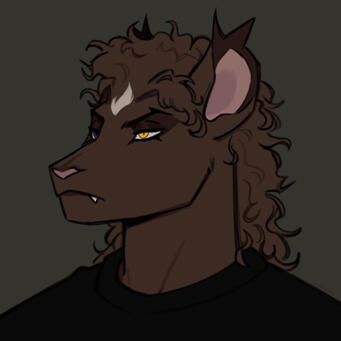
Dirk (protagonist)
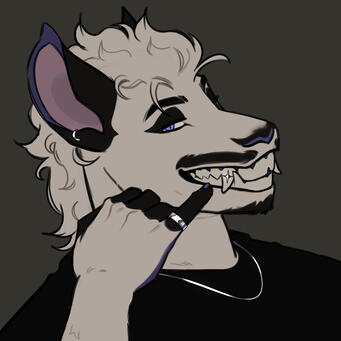
Light (deuteragonist)
Dirk is the protagonist of Ekdise. He's a young dypopard who lives with his hard-working father, Orton, helping him with his small general repair business. I created him around a decade ago, he's my most important oc. This story will mainly show his self-development, he's shown as a dypopard with zero failures, typical good hearted protagonist, until he steps his feet outside to meet the world and finds out that he has many, many flaws, and that the world won't aways be gentle to him.
I want to focus on that, aswell as his choices to be better besides the horrors that life throws at him on a daily basis. Light is my second main oc, he and Dirk meet and at first, not a good impression about each other at all. Their story work their way around and they eventually work together to resolve what the world offers them, conflicts, villains, life-threatening situations, you name it.
More about Dirk and my other characters on my TOYHOU.SE
⸙ side stories
I've been working on Ekdise for many years but i also find myself creating other side stories that take place in the same world, but in different periods of time.
Click on the titles to check the story's character and extra info!

CRUX HILL

BLOOD MASK

MARTYRDOOM

PATHLESS VISTA
⸙ world & geography
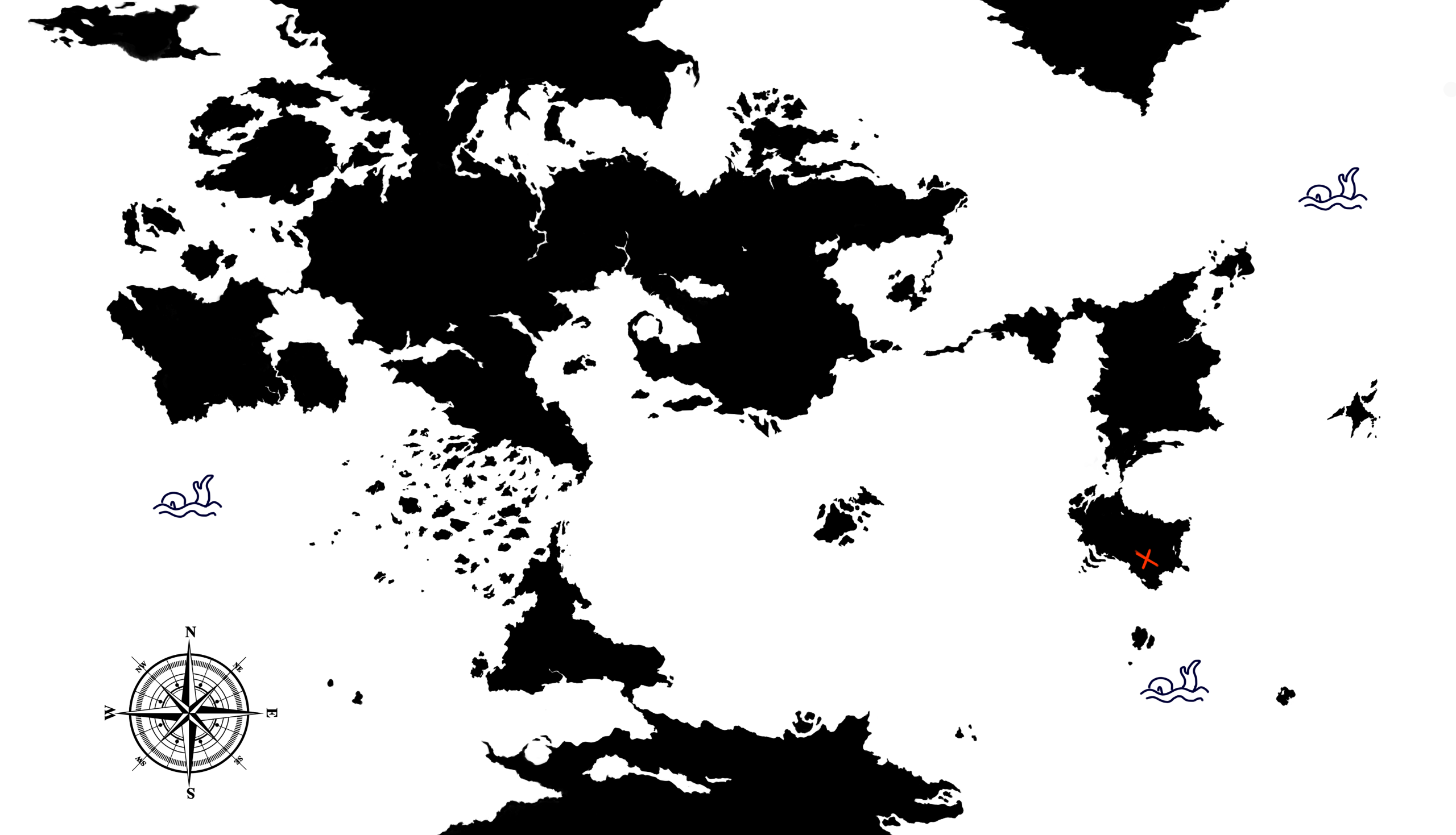
Predominant climates: tropical and temperate.
Less predominant climates: desert and tundra.(World map is under constant construction) This is the main map of Ekdise's world and where my stories take place, the full globe is still under construction.
In terms of comparison, the planet would be slightly smaller than the Earth (imagine a similar size to Venus).
There are areas that extend to the corners of the map that may be unexplored, or unknown, which for now are up to imagination. The red 'X' marks where Ekdise's story takes place.About 60% of this world has already been explored and has popularized areas, the other 40% encompasses forbidden or unexplored areas that range from islands to almost entire continents.
Its seas are even more unknown, and at the current time where the story takes place, they are the most explored areas and new things appear almost daily. Many legends are told about mysterious beings that live on the high seas, and on the coasts of the continents it is no different, every inch of the sea and beaches are full of stories and legends, and few know the truth about them in fact.Most of the areas in the northwest are forbidden or have no government, which has resulted in a nest of delinquents and dangerous individuals, because it has many islands, these dangers end up being very secluded. Many who decide to go there usually do not return, and those who do return usually do not appear intact, in general, it is a danger zone.In the extreme south and north, deserts and cold, sparsely populated climates are found. Their fauna and flora are little explored and known, although they are the object of curiosity for some, it is still an area under exploration.
The central region of the map is where the modern civilization of this world lives. Technology is not abundant or very advanced, but it is enough to aid in communication, transportation, and means of production and construction in general, and, unfortunately, it is used to produce dangerous illegal weapons.
⸙ dypopards
Designation: sentient
Diet: omnivorous
Classification: mammal
Average height: 1,68m (females) - 1,78m (males)
Average lifespan: 90 years
Locomotion: bipedal
Dypopards are not an open species and this is not a guide to make your own dypopard, it's a species information section, i kindly ask you to not use this species to make ocs/sonas, for profit or personal use.This species was developed while i developed my ocs through the past few years, as time passed i added some elements to them that hopefully makes the species unique or recognisable. Dypopards have big cats, primate and other animal's elements, but even so, they aren't related to any, just to clarify!
The population of dypopards in this world is approximately 5 billion, counting common dypopards and their race variants. They mainly inhabit areas with favorable natural resources (rivers, forests, seaside), but it is possible that a portion of their population has adapted to deserts and more remote areas, it is important to not that dypopards don't live in caves or burrows, but in cities, towns, villages, and the like. Certain species of dypopards will also relocate to places that favor their physical characteristics (example: Alaretean dypopards will live in high places, as they fly).
⸙ anatomy
head


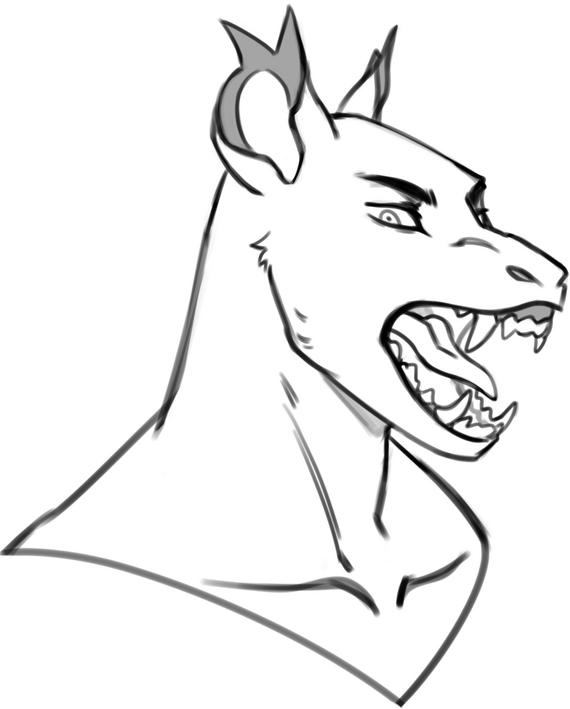
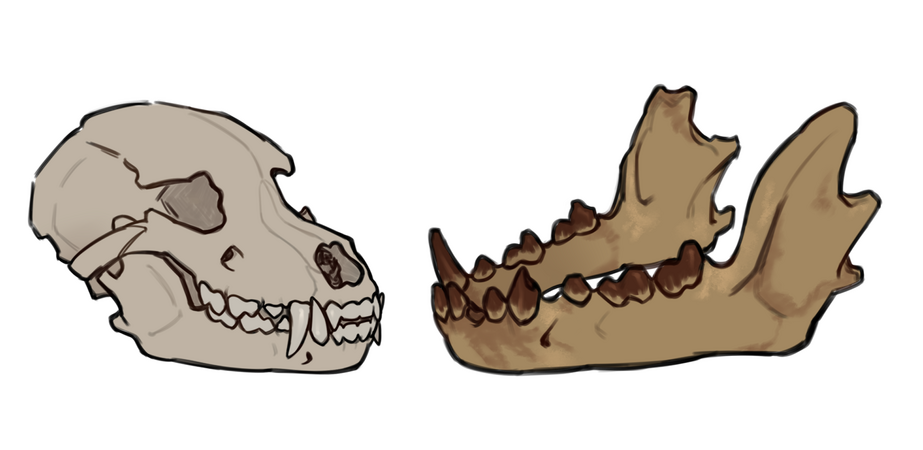
A dypopard's skull is similar to that of a canine realistically speaking, think of a mix of wolf and bear skulls, a robust head with a snout that is not so long, not so short, however, the place between nasal and frontal bones are not as flat as said species.
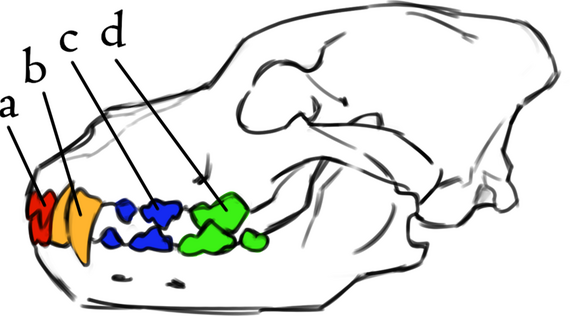
➤ Dental anatomy:
a. incisors
b. canines
c. premolars
d. molarsDypopard's noses are always similar to those of rodents, bovids and deer, with two visible cavities but no visible philtrum (the ''split'' on the middle of the nose that you see in dogs or cats). Their eyes can have any color, but some are seen as more rare: bright red, light brown, yellow and silver eyes are the most rare ones.
Heterochromia is another rare trace to find in dypopards, in fact, their cultural myths and stories associate heterochromia as an bad omen. Their eyes can show some brightness when in the dark, but their vision in the dark places can vary according dypopard's race.
body
Dypopards tend to have a fairly fast metabolism along very robust bodies, but this can vary with diet and genetics, some dypopards can be chubby, thin and very muscular aswell. The standard height for a male is 1.78, and 1.68 for females, but one thing is for sure, they have very strong legs and most individuals can jump very high, in some areas they may informally call themselves ''jumpers'' just like they call themselves ''dypos''.One of the main features on the body of dypopards is the presence of a boomerang-shaped mark just above the tail where the lower part of the lumbar is located, which may be darker or lighter in color, its shape may vary but always maintaining the boomerang shape. All dypopards and their subspecies bear the mark. There's a few place in their bodies in which strong colors match, it usually varies from one to two colors, not necessarily the same color but same tones. This happens on exposed parts of the flesh, palm of the hands, blood and eye color, it's usually a very saturated color like blue or orange, but in some rare cases it can be grey, white, or black.
Dypopards also have retractable claws like felines, but most of their populations require dypos to cut or trim their nails regularly.
fur and coats
Their fur is quite short all over their body (like lions or horses), with the exception of their hair, the middle of their back, the beginning and/or tip of their tail, and abdominal hair. There are occasions where some individuals are devoid of some of these characteristics, but this will completely depend on genetics.Facial hair in males is a type of two-layer hair, this includes mustaches and beards, and hair on some occasions. Dypos do not have a larger layer of fur over the cheek and jawline as we see in wolves or tigers.
their coat colors can be almost infinite, but there are basic characteristics for them. They can be single, double, or masked coats. consider that some dypos may have an unique type of coat if they are a crossbreed of several different coats, but this is rare.Common colors: shades of brown, black, white, orange, beige and blue.
Unusual colors: gray, reddish, pinkish, greenish, purplish tones.Keep in mind that unusual tones are not rare, just less common. Certain types of coats are considered rare in fact, such as coats with stripes, rosettes, round spots, and other patterns with repeated or diverse spots, individuals with these characteristics are considered exotic. Their hair (or manes when very long) is a very notable feature, and their sizes and textures allow dypopards to have a lot of freedom with styles or colors for their hair, dypopards with large manes are seen as powerful and strong, and their big manes might make them look bigger or intimidating.
Some extra facts about their fur:1. their fur is capable of being ''tattooed'', that is, when the skin is tattooed the fur absorbs the ink and the tattoo will remain in the fur.
2. the fact that their fur is thin and short allows sweat to stand out and run through it like it would on skin.
3. bruises and injuries also reflect on the fur and are always shown as a darker color similar to the color of the injury on the skin itself (scars are a similar color but not always).
4. Dypopards don't aways have natural coat colors like brown, grey or white. Some may have unnusual colors like green, red, blue and even pink. But there's a limit to how bright these colors get, they aways have a grey-ish effect on it making them a little more ''natural''.
5. One of the common conditions that some individuals might have is called ''stress mark''. It may occur to those that suffer from great stress, anxiety or trauma for a long period of time, it starts as a lighter or darker spot in any area of the body that continues to increase for as long as the stress continues, treatment includes the interruption of the psychological malady and mental treatment. (This disease can be compared with vitiligo in some aspects, ASIDE THE CAUSE).
behavior
Dypopards are entirely rational and can even be called humanoid, however, they can reproduce some behaviors considered animalistic or primal, such as roaring, growling, purring, biting, scratching, among others. All these gestures appear irrationally, and may be due to fright, an aggressive or defensive reaction.
Various involuntary dypopard behaviors can be seen in canines, felines and primates, for example, their fur tend to stand on end when aggressive or irritated, and they may show their teeth or reveal their claws to intimidate other individuals, etc.
Their ears and tails are very expressive and can spoil emotions and reactions, so even though they lie or try to show an certain emotion, the body language can very much tell what they really feel. Tail language can be seen below:
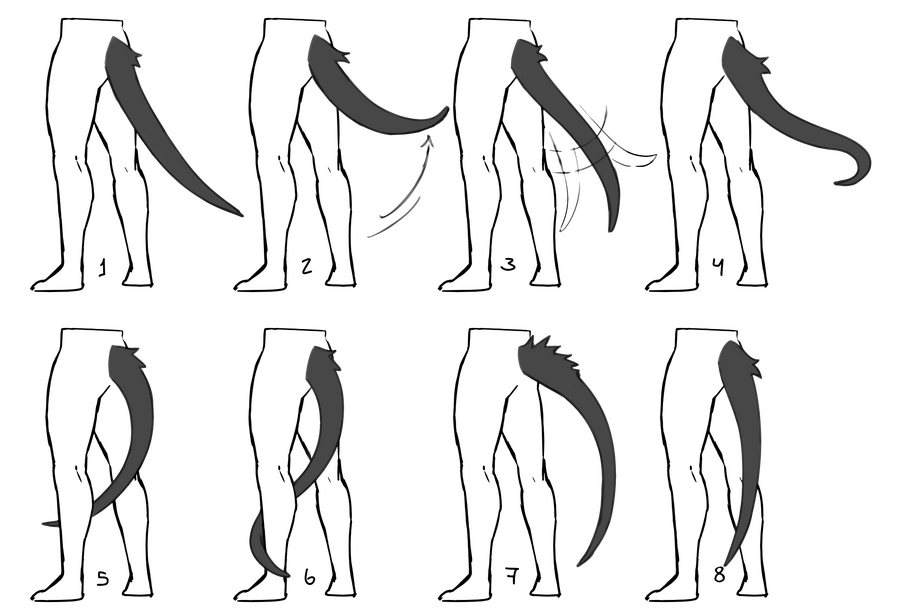
1. neutral/relaxed
2. alert/surprised
3. happy, playfulness or joy
4. curious (tail moving around)
5. defensive/submissive
6. scared
7. irritated, angry, shivers
8. sick/weak
race variants

Qeetean

Alaretean

Keratean


➤ Qeeteans are dypopards with noticeable teeth called tusks, which in the past were developed for deadly attacks, so they are usually seen as threatening. These tusks can disturb them in some activities but nothing that compromises their lives. Tusks can vary a lot in size and format.➤ Alareteans are dypopards that have large wings developed for flight, the wing will always be in proportion with the body to enable a well executed flight, so this results in large wingspans in most individuals.
Despite having great flight capacity, they have limits on the time they spend flying, and this can be encouraged throughout life for longer periods flying. There are moves that are considered forbidden by the alareteans themselves that are notable:• Dive: This movement consists of going up to a great height and soon after, shrinking the wings and ''diving'', letting yourself fall like a meteor at great speed, this was quite used in hunts but it gradually ceased to be used, and it is considered a suicidal maneuver - (see ''falcon dive'' for reference).
• Death Spin: This move consists in flying in a straight line and gradually doing a 360° roll maneuver in the air, next it becomes a very explosive movement and stopping it mid-air requires experience. This was used to knock enemies out of mid-air - (see ''plane barrel roll'' for reference)➤ Kerateans are individuals that have antlers on top of their heads, very similar to bovids and cervids.
The shape of these antlers is always very varied in shape and size, as can be seen above. These antlers go through the process of falling off at the beginning of every year, and the time it takes for them to grow varies with their size.
After growing, a fake skin starts to fall off to reveal the new and thin velvet (the antlers do not lose the velvet to reveal the bone horn as seen in cervids, but a new thin velvet covered one), the peeling process can be uncomfortable to the point of itching and hurting, so these dypopards will usually wet the whole antlers with warm water to peel off the old velvet, but almost all of them do it with someone's help, it's complicated for a keratean to remove all the velvet by themself.

Naquatean

Monterean
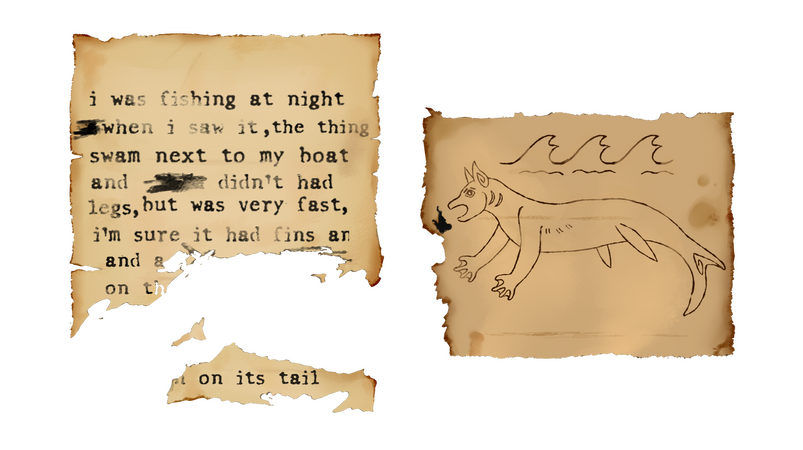
➤ Naquateans are supposed dypopards that live on the banks of rivers and oceans, they are mentioned in folklore and legends, their existence is questionable. They are described as dypopards with fins that live underwater, but these claims are based on hearsay and speculation, nothing is certain.
One of the first records of the sight of a naquatean was the one that can be seen above, a logbook of an unknown sailor who was fishing on his boat, he claims to have seen a creature very similar to an adult dypopard swimming below his boat at night, this is one of the oldest description of the supposed naquatean, illustrator is also unknown. Many claim to have seen something similar to what was described, however, few dypos know, in fact, if they exist or not.➤ Montereans are giant dypopards that stand between 2,30m and 2,55m tall, they live a solitary life and wander in forests and hidden woods, they usually don't have speech but are completely rational and may use sign language to comunicate, unlike naquateans, their existence is not speculative as there are monterean fossils and skeletons around the world, as well as daily sights, the biggest recorded monterean had about 2,90.
They used to be highly sighted in antiquity but have been hunted for decades and few individuals remain. The only living ones hide in hidden places and have survived for many years without being seen. The image shows a monterean jaw that appears to be very old, showing the size compared to a common dypopard.